


A client recently sent me a manuscript of more than 100,000 words—blog posts, website content, new material, and ideas accumulated over years. The subject was clear and the information valuable, but the content was sprawling.
In this situation, many writers’ instinct is to start cutting. But trimming words rarely solves the real problem. More often, the manuscript doesn’t yet have a clear center: The idea that determines how the material should be shaped, structured, and refined has not yet come into focus.
Our first step toward creating a cohesive book—and a step critical for any nonfiction project—was to find the core message.
What is a core message?
A core message is a one-sentence encapsulation of your book’s overarching thesis, point, or takeaway. It summarizes the essence of your book. It is your “If you don’t remember anything else, remember this…” statement.
Why is a core message important?
A core message provides focus for your book. That focus helps you:
- Position your book strategically in the market. Whether you are self-publishing or proposing your book to a publisher, you need to understand where your book fits in the existing landscape. Your core message is the differentiator that will attract the right audience.
- Market cohesively. Your core message drives your marketing language, your book title, your tagline, and possibly even your tactics.
- Edit effectively. By knowing your core message, you can more easily see what to keep and what to cut—if something doesn’t align with your core message, cut it.
When you don’t have a clear core message, your book positioning, marketing, and content become muddier and probably more generic. A core message actually eases the writing and publishing process.
How is a core message used?
A core message is not always used verbatim, but it is the essence of what comes through for the book. To demonstrate, let’s look at a well-known book: Atomic Habits: An Easy and Proven Way to Build Good Habits and Break Bad Ones by James Clear.
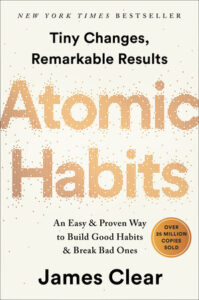
Atomic Habits has sold over 25 million copies worldwide since its publication in 2018. I would speculate part of that success is due to the very clear core message (in my words):
Making incremental changes and creating effective systems—rather than relying on willpower and big goals—leads to remarkable long-term results.
I’m not sure you would find these exact words in the book, but I bet you’d find something very similar (probably more than once).
Notice how the core message shows up:
- Main title: Atomic Habits hints at the message in a hook-y, emotional way. We know we are talking about habits, and from atomic we can infer something tiny or explosive—or both.
- Subtitle: An Easy and Proven Way to Build Good Habits and Break Bad Ones gets specific about the small changes the book addresses. The word easy suggests “doable” (more so than powering through with willpower), way implies a system or framework, and proven reinforces effectiveness.
- Tagline: The line found at the top of book cover is “Tiny changes, remarkable results.” It is a pithy hook that encompasses the core message.
The core message is like the theme of a piece of classical music. The book title, tagline, book description, and book content are variations on the theme.
How do you find your core message?
Right off the bat, let me say that finding your core message is sometimes straightforward and sometimes…not. It is typically an iterative process, and different writers have different methods for uncovering it. I’ll share here one way to think about it, but you may find another path.
To find your core message, consider your:
- Audience: Who are you writing for? Why would they read your book? What do they need and want to know? What is your goal in reaching this audience (e.g., for them to take some action)?
- Subject matter: Where are you the expert? Where do people struggle with this subject? What are you helping them with? What are your three to five most important points?
- Competition: What are other books already saying on this subject? What are you trying to add to the conversation? How is your message different? Is there a specific gap you’re trying to fill?
Additionally, I find it sometimes helps to define what your message is not as much as what it is: “I am not writing about…” Like the sculptor carving away the stone to find the figure hidden in it, you peel away options to clarify your focus.
How do you know you’ve found your core message? It might take a while—even as you write and revise, your core message will probably get refined—but I feel a sort of thunk when it becomes clear. It resonates emotionally and I can visualize how all the book content will map back to it.
Examples of core messages: personal finance books
I find this topic easier to understand by looking at examples, so let’s look at personal finance books, since they are a common, relatable topic, and I’ve worked on more than one.
Two personal finance books
Here are two published books about personal finance with brief assessments of the core messages and how they align to various book elements.
Making Sense of Money: How to Outsmart Inflation, Build Financial Security, and Leave a Legacy by Jim Whitehurst
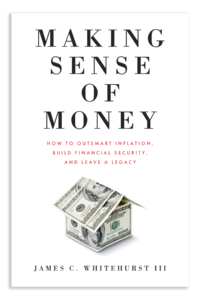
- Core message: “Becoming a good steward of your money (getting your financial house in order) allows you to cultivate wealth and expand your opportunities.”
- Audience: Younger and/or less experienced, newer to personal finance.
- Title: Encompasses the idea of learning to be a good steward, some of the “how,” and the opportunities it brings.
- One of the book cover headlines: “Are you good with money?” gets at the idea of learning and growing into being a good steward.
- The NOT: This book is not for savvy investors and people with significant wealth; rather, it is foundational to understanding what is needed to build financial security.
The Wannabe Investor: 40 Must-Know Facts Before Buying Your First Stock by Ann Marie Sabath
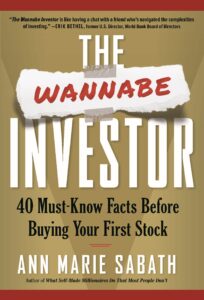
- Core message: “Many people find investing to be intimidating, but it’s not as hard as you think and it’s key to building wealth.”
- Audience: New to investing.
- Title: Wannabe gets at the fear holding readers back from investing; 40 Must-Know Facts encompasses the idea “it’s not as hard as you think; we’ll break it into pieces.”
- One of the book cover headlines: “The key to unlocking a brighter financial future” emphasizes that investing is essential to building wealth.
- The NOT: This book is not for people who need personal finance basics; nor is it for day traders or derivatives investors. Rather, it is for those beginning the journey into stock investing.
As you see in each of these examples, the core message itself is not used verbatim, but it infuses the language used.
Core messages for other possible personal finance books
Now say you’re writing a book about personal finance. What possibilities could distinguish your book in the constellation of books that already exist on that topic, including the two above?
Some possible core messages for:
- High school/college students: “Financial literacy sets you on the path to security and opportunity—the younger you start, the more benefit you gain from time.”
- People in debt: “Getting out of debt takes effort, but it is doable—one step at a time.”
- Readers who have money but lack fulfillment: “Money is not the be-all end-all; it is a tool to help you contribute your talents and build a better world.”
- People with money but not confidence: “Financial skill is a foundation for agency—it helps you claim your future and make better decisions.”
- Professionals nearing retirement: “Pay attention to your finances now so that in retirement you can do what you want and don’t outlive your money.”
You can see how many possible core messages there can be. Finding the right one for your book will help you find the right readers for it.
Just to be clear…
If you don’t remember anything else from this article, remember this: Your nonfiction book needs a core message.
Need help finding your core message? Get in touch at karin@clearsightbooks.com, and we’ll see if I can help.