
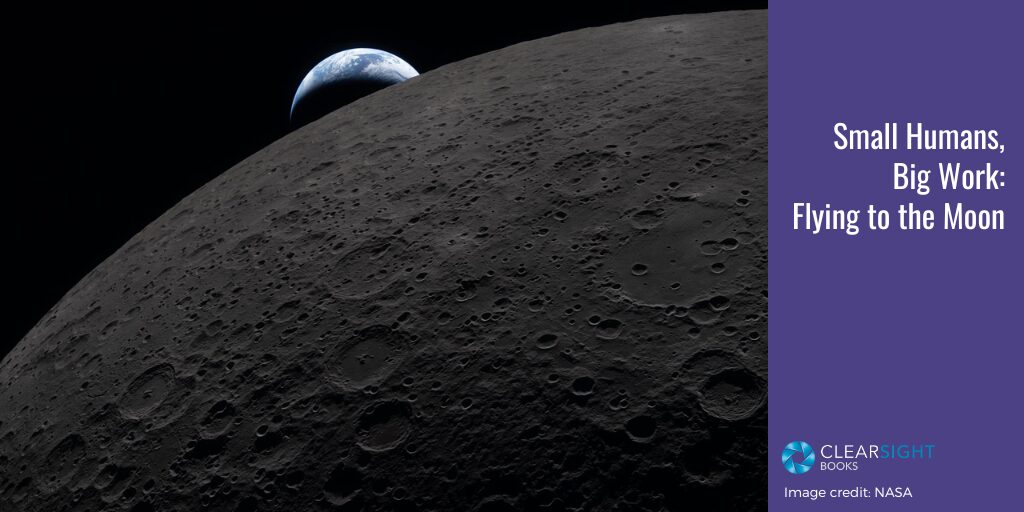
Earthset captured through the Orion spacecraft window April 6, 2026, during the Artemis II crew’s flyby of the Moon. A muted blue Earth with bright white clouds sets behind the cratered lunar surface. The dark portion of Earth is in nighttime. On Earth’s day side, swirling clouds are visible over the Australia and Oceania region. Text: Small Humans, Big Work: Flying to the Moon.

Earlier this month, NASA’s Artemis II mission launched, looped the Moon for the first time in more than 50 years, and came home. Maybe it’s old news by now in the era of the 24/7 news cycle, but I’m still awed by it.

Astronauts Reid Wiseman, Victor Glover, Christina Koch, and Jeremy Hansen spent 10 days on their mission, and what a mission it was.

  • Check out the joy and amazement on this guy’s face as he watched the launch from his backyard. (Having witnessed the Challenger tragedy, I don’t take launches for granted.)
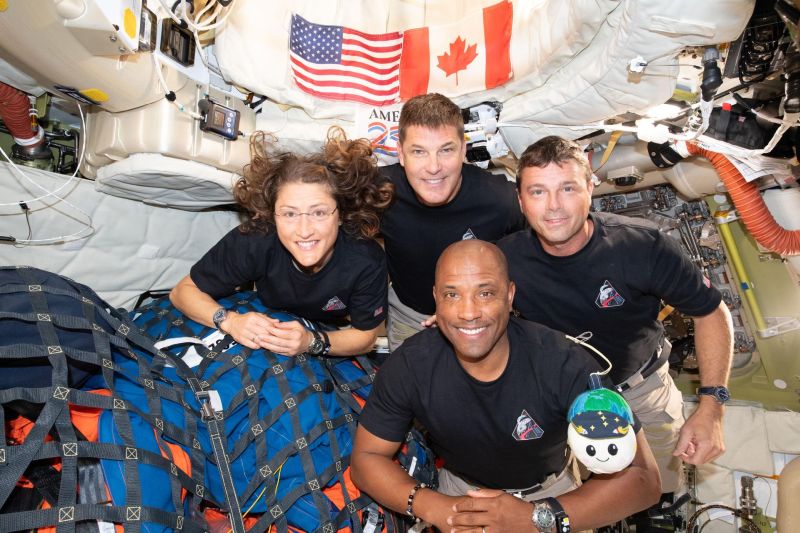
  • My inner child beamed when I learned the astronauts used a plushie toy named Rise, designed by 8-year-old Lucas Ye, to indicate when they hit zero gravity.
  • I marveled at the NASA planners’ sweet foresight. The morning of the lunar flyby, the crew’s wakeup call was from the commander of the Apollo 13 mission. “Hello, Artemis II. This is Apollo astronaut Jim Lovell. Welcome to my old neighborhood.” Lovell recorded his greeting (at 1:10 in video) for them last August, shortly before his death at age 97.
  • Lunar flyby aside, the crew clearly did not have enough work to do, because they managed to film an ’80s sitcom credits spoof during the voyage. Hilarious!

My husband and I watched NASA TV for the crew’s return to Earth. We sat enthralled watching the ablative heat shield burn, the drogue chutes deploy, then the main parachutes slow the capsule as it dropped into the ocean. (Having witnessed the Columbia tragedy, I also don’t take reentries for granted.)

We waited for the “front porch” to inflate so the astronauts could disembark, listened to interviews about all the retrieval preparation, and didn’t stop watching until NASA TV ended its coverage for the night.

A friend texted me:

Did you watch the Artemis splashdown???? I’m just verklempt. So. Freaking. Cool. . . . My only experiences with space have been movies and tragedies. And we got such a view of this mission and the significance of it. And of the humans doing it. It was just amazing, all of it.

My response:

Smart people working together to accomplish something hard. So refreshing.

In the days after the mission, I read similar commentary—people filled with inspiration and pleasure and, frankly, sheer relief at watching competence in action.

So what does this have to do with writing?

  • Perspective. Humans are so freakin’ small. So why do we make our problems bigger than they need to be?
  • Inspiration. We all need it. Seek out people doing good work wherever you can.
  • Teamwork. A competent, well-functioning team reduces anxiety and gets things done.
  • Fun. Don’t forget to enjoy yourself. The world can always use more ’80s sitcom skits.

Yes, books are hard, but they’re a helluva lot easier than flying to the moon.

I can’t help with rocket science, but I can help with books. If that’s your current challenge, get in touch at karin@clearsightbooks.com.


Related Reading


Artemis II Photos

Hey, I’m not going to talk about a space trip without sharing some photos. Here you go! (All images are courtesy of NASA.)
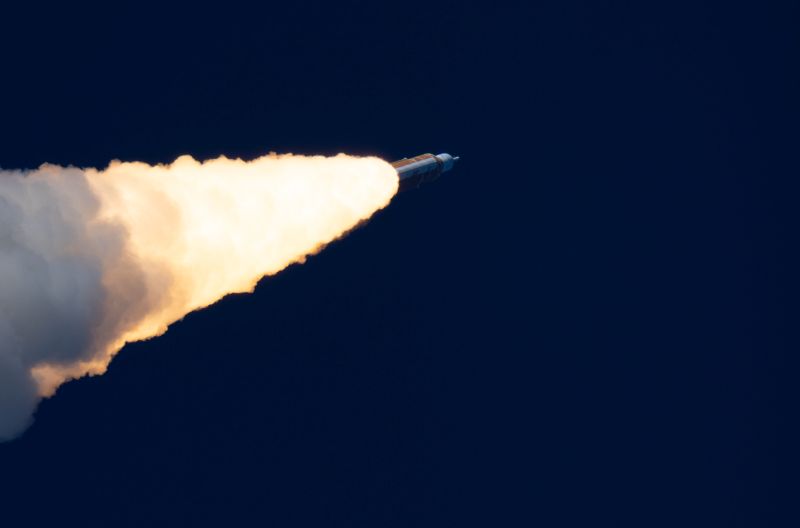
A dark sky with the rocket traveling from the left edge of the image to the middle with a trail of fire and smoke.
NASA’s Space Launch System rocket carrying the Orion spacecraft launches on the Artemis II mission, April 1, 2026, from Kennedy Space Center in Florida. (Photo Credit: NASA/Joel Kowsky)
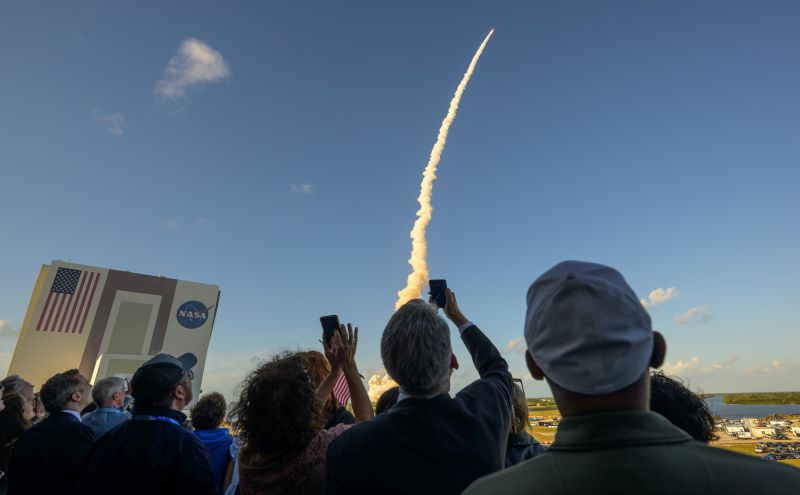
People watching and taking photos of the Artemis II launch. A bright blue sky with a tiny rocket shooting up with a big cloud following it. A NASA building with a giant American flag is in the background at left.
Guests watch the launch of NASA’s Space Launch System rocket carrying the Orion spacecraft on NASA’s Artemis II mission, April 1, 2026, from NASA’s Kennedy Space Center in Florida. (Photo Credit: NASA/Bill Ingalls)
The four crew members wearing black t-shirts in their cabin. Koch is a white woman with longer curly hard; Hansen is a white man with short brown hair; Wiseman is a white man with short brown hair; Glover is a black man with a shaved head. They are in zero gravity (shown by Koch's floating hair) and have their toy, Rise, with them. The American and Canadian flags are in the background and everything is secured to not float away. They are all smiling.
The Artemis II crew – (clockwise from left) Mission Specialist Christina Koch, Mission Specialist Jeremy Hansen, Commander Reid Wiseman, and Pilot Victor Glover – pause for a group photo with their zero gravity indicator “Rise,” inside the Orion spacecraft on their way home. (Image Credit: NASA)
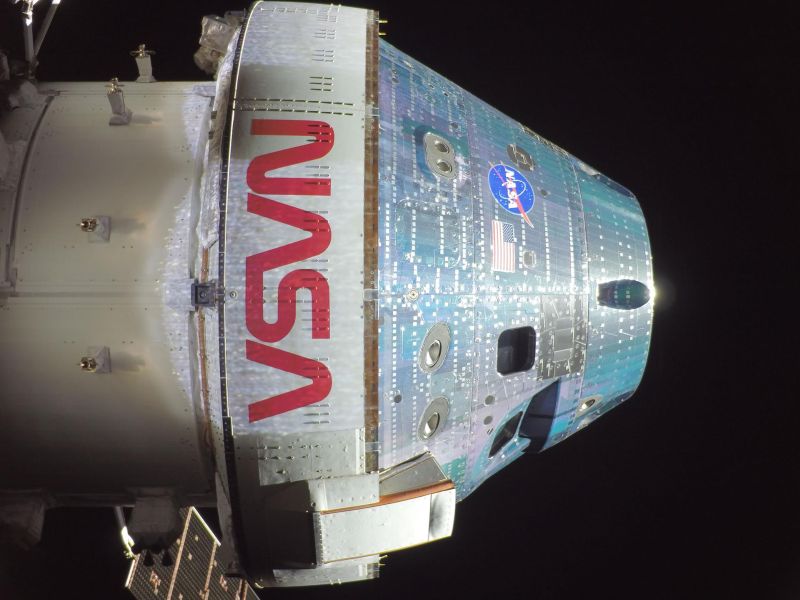
A closeup view of what looks like the nose of the rocket. It is shiny silver on the cone and painted white with NASA in red letters on the body.
Orion snapped this high-resolution selfie in space with a camera mounted on one of its solar array wings during a routine external inspection of the spacecraft on the second day into the Artemis II mission. (Image Credit: NASA)
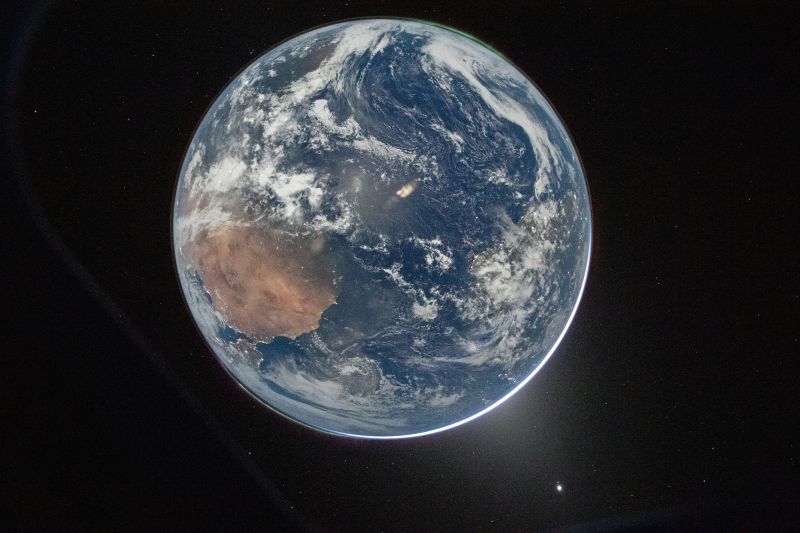
A blue cloud-swirled Earth hanging in space.
Hello, World. This nighttime picture of Earth was taken on April 2, 2026, by an Artemis II crew member aiming a camera through a window of the Orion spacecraft. (Image Credit: NASA)
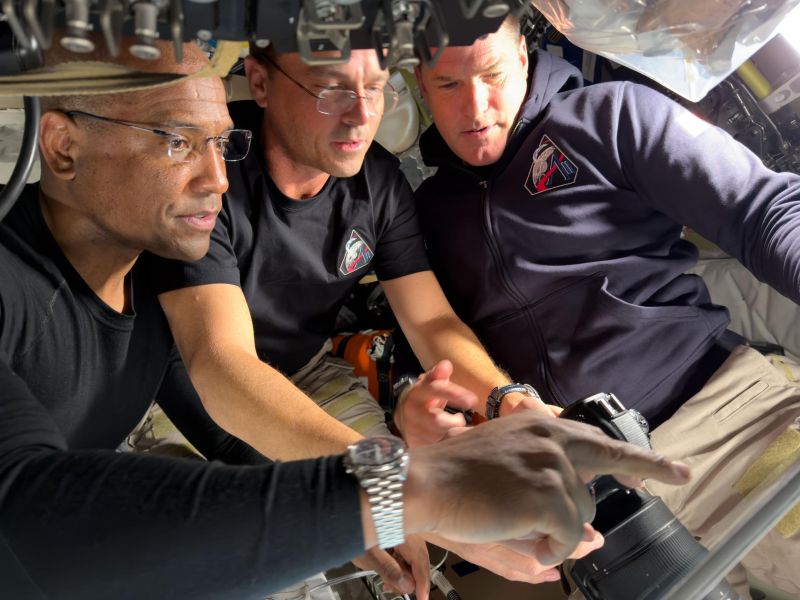
The three male astronauts sitting close together to set up a camera. Two of the three are wearing reading glasses.
Victor Glover, Reid Wiseman, and Jeremy Hansen configure their camera equipment shortly before beginning their lunar flyby observations. (Image Credit: NASA) This image cracked me up because two of the three are wearing reading glasses. This is a “seasoned” crew at ages 47 to 50. (I feel ya, man.)
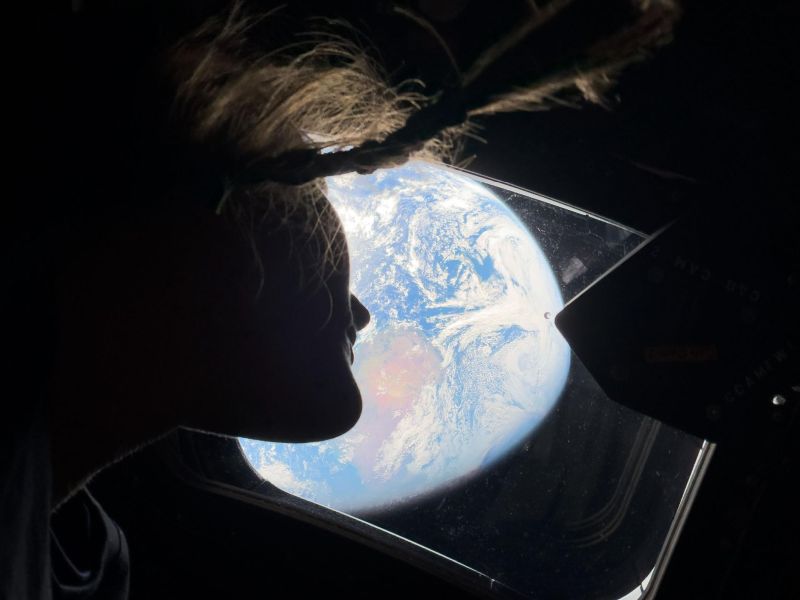
Christina Koch looking through the window at the Earth in the distance. The camera is angled up so you see Koch's chin from bottom and her longer hair is floating around. The Earth is bright so everything else seems dark.
NASA astronaut and Artemis II Mission Specialist Christina Koch peers out of one of the Orion spacecraft’s main cabin windows, looking back at Earth, as the crew travels toward the Moon. (Image credit: NASA)
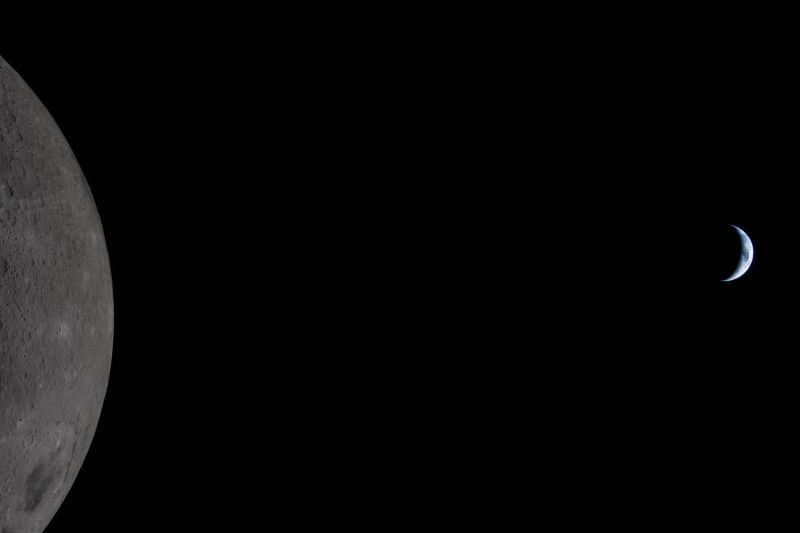
A large segment of the moon at the leftmost side of the frame and a tiny Earth as a crescent at the rightmost edge. Most of the image is of the black space between them, emphasizing the perceived difference in size.
Earth appears tiny as the Moon looms large in this photo taken by the Artemis II crew during their lunar flyby on April 6, 2026. Taken 36 minutes before Earthset, our home planet is visible in the blackness of space off the limb of the illuminated Moon. Earth is in a crescent phase, with sunlight coming from the right. (Image Credit: NASA)
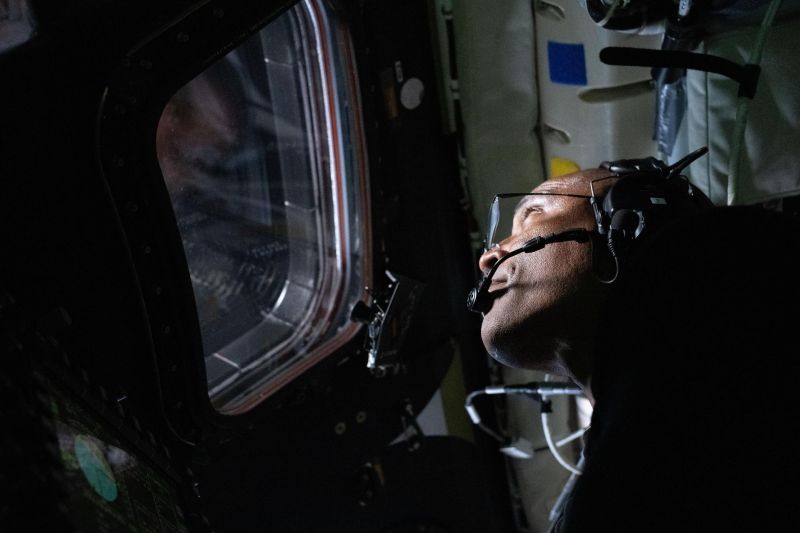
Victor Glover is looking to the left out the window. The camera angle is tilted up at his chin, and the left side of his face is illuminated, presumably from what he is viewing out the window.
NASA astronaut and Artemis II Pilot Victor Glover pictured here in the Orion spacecraft during the Artemis II lunar flyby. Glover and his fellow crewmates spent approximately seven hours taking turns at the Orion windows capturing science data to share with their team back on Earth. At closest approach, they came within 4,067 miles of the Moon’s surface. (Image Credit: NASA)
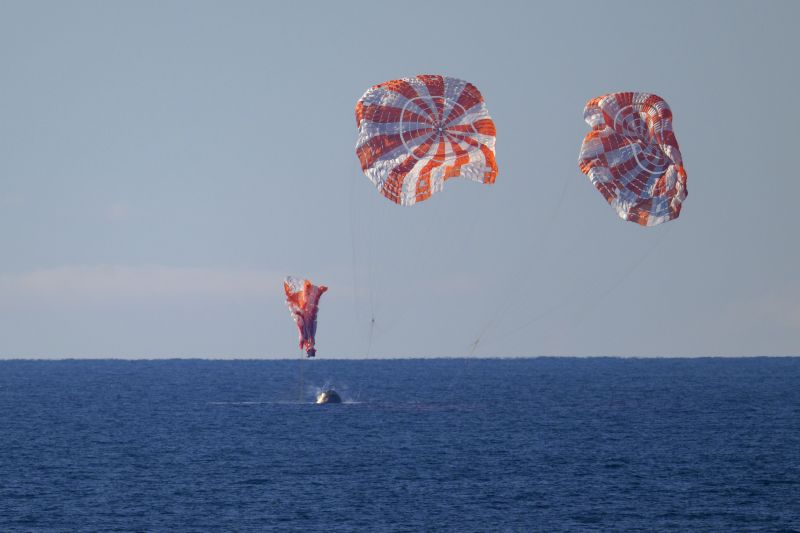
Three orange and white striped parachutes collapsing as the reentry capsule lands in the blue ocean.
NASA’s Orion spacecraft as it lands in the Pacific Ocean off the coast of California, April 10, 2026. (Photo Credit: NASA/Bill Ingalls)
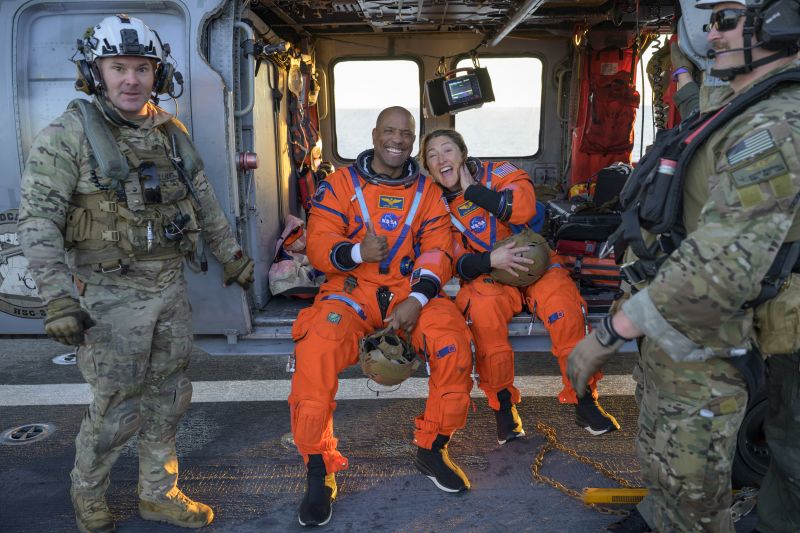
Glover and Koch in their bright orange space suits sitting on a helicopter with military support staff around them. They are smiling big and Glover is giving a thumbs-up.
Victor Glover and Christina Koch sitting on a Navy MH-60 Seahawk on the flight deck of USS John P. Murtha after they and fellow crewmates were extracted from their Orion spacecraft after splashdown, April 10, 2026, in the Pacific Ocean off the coast of California. (Photo credit: NASA/Bill Ingalls)
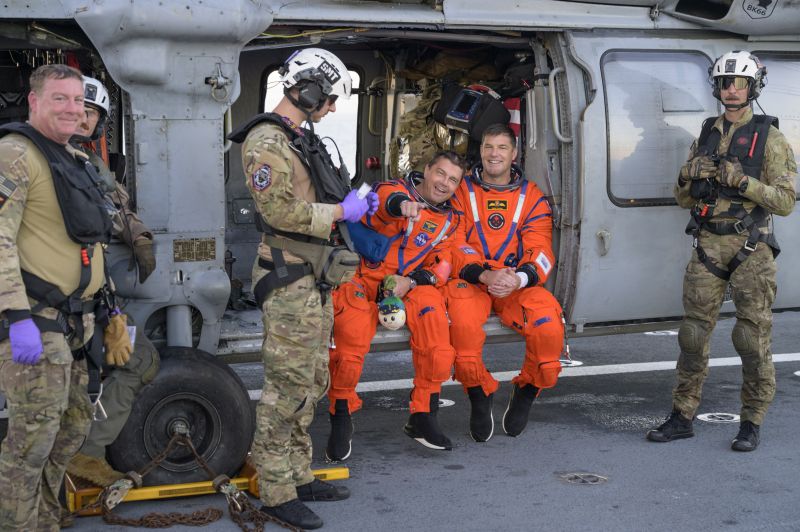
Wiseman and Hansen in their bright orange space suits sitting on a helicopter with military support staff around them. They are smiling big and Wiseman is pointing at the camera.
Reid Wiseman and Jeremy Hansen sitting on a Navy MH-60 Seahawk on the flight deck of USS John P. Murtha after they and fellow crewmates were extracted from their Orion spacecraft after splashdown, April 10, 2026, in the Pacific Ocean off the coast of California. (Photo credit: NASA/Bill Ingalls)

“The sense I had was the sense of fragility and feeling small, infinitesimally small, but yet this very powerful feeling as a human being, like as a group . . . small and powerless but yet powerful together.” ASTRONAUT JEREMY HANSEN